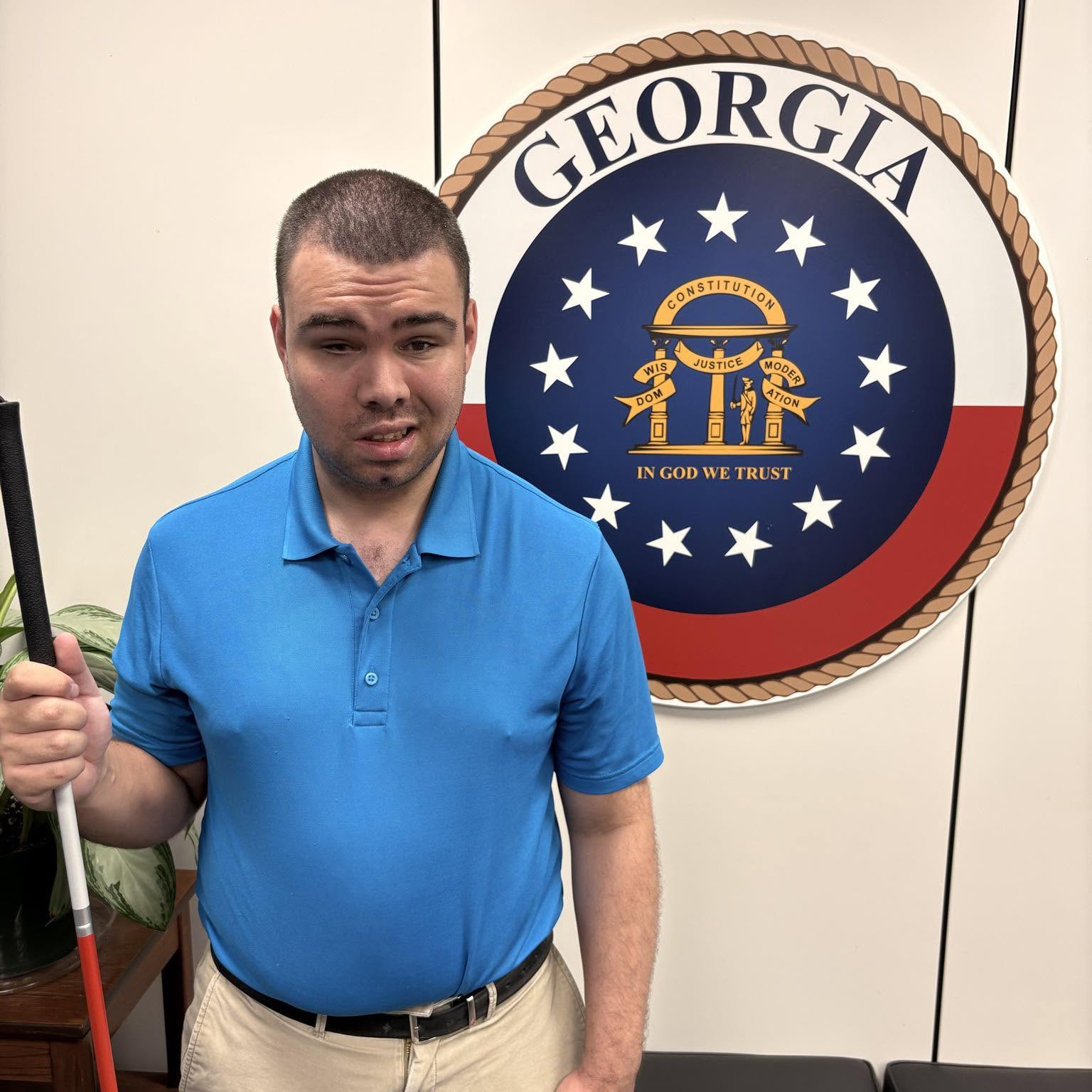
Houston County, GA. – Today marks the 36th anniversary of the Americans with Disabilities Act (ADA).
I have released the following statement regarding today’s celebration:
Today, we celebrate the 36th anniversary of the Americans with Disabilities Act, signed into law on July 26, 1990.
While we now have products and spaces that are accessible to people with disabilities like myself, there is still a long way to go before we achieve truly equal access to opportunities. We need better public transportation, accessible sidewalks, virtual options to attend local public meetings in every city, and many more improvements to make our cities, towns, and neighborhoods inclusive for everyone. As Chair of the Houston County Democratic Committee’s Disability Caucus and Chair of the Young Democrats of Georgia’s Disability Caucus, I continue to work toward expanding accessible public transportation in our community, and I remain deeply committed to that fight.
However, we still face daily discrimination. People with service animals are routinely denied rides on Uber or Lyft. Inaccessible websites continue to make filling out forms, conducting business, and accessing services difficult or impossible. Furthermore, disabled voters continue to face persistent barriers to exercising their right to vote.
This year, our rights face some of the most serious threats we have seen in decades. Section 504 of the Rehabilitation Act of 1973 was our nation’s first federal civil rights law protecting people with disabilities from discrimination, paving the way for the ADA seventeen years later. Today, that foundation is under active attack. Several states are currently suing to strike down federal protections that keep disabled individuals out of institutions when they can and want to live at home. On top of that, recent Department of Justice actions regarding the Olmstead decision threaten our right to live independently in our communities. For over a decade, this guidance has protected our ability to receive care at home instead of being forced into institutional settings. Walking away from it now puts real people’s independence, safety, and livelihoods at risk.
We cannot afford to be silent while these rights are chipped away. We must keep showing up, speaking out, and holding politicians in Washington, in our state capitals, and in our local governments accountable to the promises made 36 years ago.
I also want to remind all of us that advocacy isn’t found only at the podium or in a phone call to a city council member, state legislator, or member of Congress. It is also found in checking in on one another. If you know someone with a disability—especially someone who may be isolated by transportation or daily barriers—please take the initiative to reach out. Call, text, or send them an audio message. Ask how they are doing. If someone tells you they just need to get out of the house, whether to talk, run an errand, or simply feel less alone, offer to give them a ride with no destination in mind if they need to clear their head, or set aside dedicated time to sit with them. Small, proactive acts of community mean just as much as legislation.
We remember the advocates who paved the way for us, including Gaylon Tootle, whom I was honored to know personally. I have full hope that future advocates will carry this fight forward.
As I said above, there is still a long way to go. My hope is that in the years ahead, our country will grow more understanding, more compassionate, and more equitable for people with all disabilities—mental, physical, and intellectual.
Resources
- DOJ memo stokes fear among disability advocates of a return to institutionalization | National Public Radio
- Defend Section 504 | Center for Public Representation
- Texas v. Kennedy (formerly Texas v. Becerra): What it is and How You Can Help Stop the Attack on Section 504 | Disability Rights Education & Defense Fund