Introduction
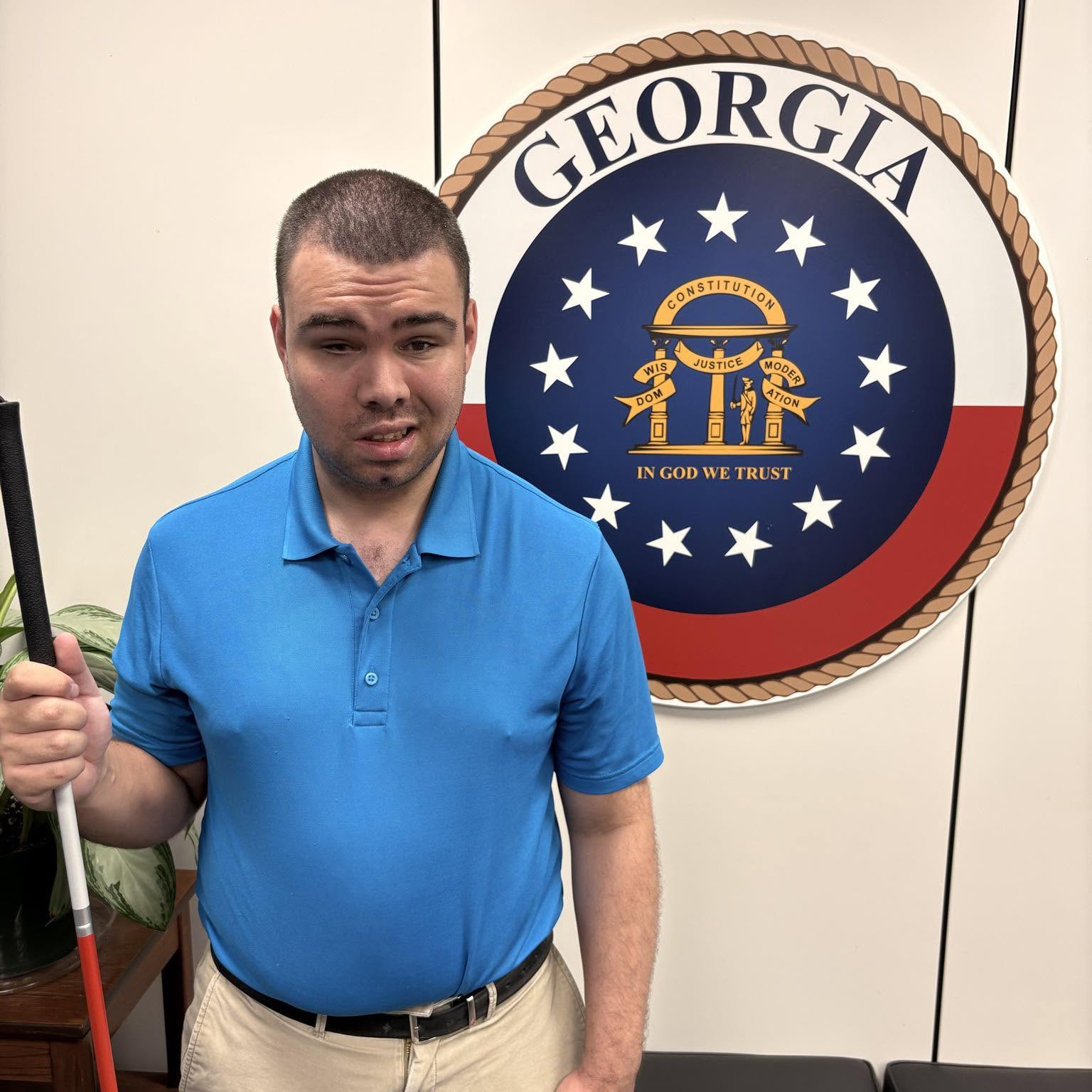
In this guide, you’ll learn how to respectfully interact with blind people like myself. These tips apply to community interactions, online spaces, friendships, and even romantic relationships.
Before We Start
I understand that you may have never met a blind person before. Or perhaps you recently ran into me or another blind person with a white cane at a community event and felt awkward or unsure of how to interact respectfully. From my perspective, I want to give you practical, straightforward ways to connect with me and others who are blind or have low vision. I’m writing this guide to share my personal experiences meeting new people and to explain exactly how I feel in various social situations.
Disability Can Happen to Anyone (Don’t Take Able-Bodiedness for Granted)
It’s incredibly easy for people to take basic, able-bodied privileges for granted—like driving, reading with just your eyes without assistive tech, or navigating a crowded room without thinking twice. But the reality is that disability can happen to anyone at any time, completely without warning, due to an accident, an unexpected illness, or aging. I don’t say this to scare anyone; I say it to build genuine empathy. When you interact with me or the broader disability community, remember that accessibility isn’t a niche accommodation for ‘other’ people—it’s a fundamental human standard that protects all of us. Treating me with respect and setting up inclusive spaces today ensures a world that’s ready to support anyone tomorrow.
Getting to Know Me for the First Time
Here are some useful tips for when we meet or get to know each other for the first time.
Introduce Yourself
When we approach each other at an event, social gathering, or rally, please don’t hesitate to introduce yourself. For example, you can say:
- “Hey! My name is [Name]! How are you doing today?”
- “Hi! I’m [Name]! Are you enjoying the protest?”
- “Hey! I’m [Name]! It’s nice to meet you!”
If my hand is extended, it means I’d like to shake yours. I shouldn’t have to reach blindly to find a hand, nor should I always be the one to initiate an introduction. Also, if you prefer a fist bump instead, simply communicate that preference to me out loud, and I’ll gladly match it. This initial meeting is a great opportunity to get to know me, so feel free to keep the conversation going.
Do Not Shout or Speak Loudly
When speaking to me, please do not shout. I can hear you fine, just like anyone else. The only exception is if we’re in a loud crowd, where raising your voice makes sense.
Remember That My Only Difference Is My Vision
Being blind doesn’t mean I have other medical conditions, such as hearing loss or speech impairments. Please do not assume I have multiple disabilities. Treat me normally, just like everyone else.
Direct Your Questions to Me, Not the Person I Am With
If I’m accompanied by someone, such as a friend at a community event, please do not speak to them to answer questions meant for me. Being blind doesn’t mean I can’t hear you. I can hear your voice perfectly fine, and I’m entirely capable of speaking up and joining the conversation to answer your questions directly.
Do Not Stop and Stare
Throughout my childhood and into my adult years, family members have often had to tell me that someone was staring at me. Staring is rude and unacceptable behavior. Instead of staring, simply walk up to me and start a normal conversation.
Do Not Assume I Lack Intelligence
I’m highly skilled in technology, passionate about advocacy, and comfortably consider myself a bit of a nerd. In fact, I build websites, including the platform hosting this very guide. Please do not assume I’m not smart. If I’m unfamiliar with something, I’ll simply say, “I don’t know,” or ask, “Can you explain that to me?”
Involuntary Laughter During High-Stress Situations
Under extreme fatigue, severe sensory overload, or high-stress situations—such as prolonged flight delays and cancellations (like having to deplane multiple times during a 12-hour airport hold) or sudden schedule changes—my nervous system may occasionally respond with involuntary or nervous laughter. This is an automatic biological mechanism to release internal tension. It’s never meant to mock anyone, dismiss the seriousness of a situation, or treat a difficult moment as a game. If you notice this response, please understand that it simply signals high stress or fatigue, and treating the moment with calm, direct communication helps keep things grounded.
Do Not Grab Me Without My Consent
It is entirely disrespectful to grab me or any other blind person without consent. While I understand you may be trying to help by guiding me toward my destination, grabbing me is inappropriate. Instead, you may ask the following questions when encountering me or another blind person out in public with a white cane who’s traveling by themselves:
- “Do you need help navigating to [Location]?”
- “Hey, do you need help with [Task]?”
If I accept your assistance, I’ll typically use a technique called “sighted guide,” where I place my hand on your elbow. If I decline, it simply means I don’t need help; please do not take it personally. While I appreciate you looking out for me—especially in unfamiliar areas—please never grab me without asking first.
To share this important message with others or read the full public service announcement online, click the link below.
READ: Please don’t grab a blind person in public without asking first (PSA)
Using Smart Glasses for Navigation
Today, many blind or low-vision solo travelers utilize AI smart glasses—such as Meta Smart Glasses—as hands-free assistive tech to navigate environments confidently without any assistance from airport staff or contractors, including major public transit systems and large, complex airports, such as Houston’s two main airports: George Bush Intercontinental Airport (IAH) and Houston Hobby Airport (HOU). When paired with accessibility tools like Aira or Be My Eyes, these glasses stream live video to professional visual interpreters or sighted volunteers who describe surroundings, read text on signage that’s above me, such as a gate number (e.g., A12), and assist with real-time navigation. Additionally, I can initiate a hands-free video call on Facebook Messenger via my iPhone that connects to my Meta Smart Glasses, allowing a sighted friend or family member to look directly through the glasses’ camera to assist in real time.
Just because you see me using smart glasses paired with a white cane and walking at a slower pace to be more cautious of my surroundings doesn’t mean that you should grab me and physically move me around without my consent, or panic about being recorded without your consent. My smart glasses camera is used primarily as hands-free assistive tech to navigate public spaces like airports independently—not as a tool to record or monitor passengers going to their flights or enjoying airport amenities, such as riding airport trains without consent. This technology is designed to empower me to navigate on my own without assistance from airport personnel. Furthermore, if you see me wearing my smart glasses, please keep in mind that I’m about to call an Aira visual interpreter or am likely on an active video call with one. If you see me moving my big old head around when I stop or walk and talking to myself, that simply means a professional visual interpreter is giving me turn-by-turn directions to point my glasses’ camera so the interpreter can see my location, obstacles, and overhead signage in real time.
If you approach me to offer help—which I truly appreciate you asking—I’ll simply let you know that I’m already on an active video call with someone. I’ll only accept an offer of assistance if my assistive tech isn’t cooperating, such as when navigating to a complex rideshare pickup area or if a kind TSA Agent that I trust during screening offers assistance getting to a gate, especially early in the morning or on a tight schedule that’s close to my flight’s departure time. If an airport doesn’t offer complimentary Aira Access, such as my home airport (ATL) that I’m currently advocating to restore Aira Access for all travelers who utilize the service—whether I’m departing or returning—I’ll have no choice but to request Meet and Assist through my airline, which means they’ll assign a contractor or airport staff member to escort me, which takes away my ability to navigate independently on my own terms and lowers the risk of me missing my flight due to long wait times.
Also, please refrain from patronizing remarks (like saying “You’re doing a good job!” just to feel good inside), and never film me to post content for TikTok or social media clout. Respect my process, allow me to navigate independently, and let me travel in peace like everyone else!
Do Not Mock My Vision, Question My Blindness, or Ridicule My Assistive Tech
When you see me independently navigating public spaces—especially busy transit hubs like Metro stations—and I ask for assistance, please treat me with basic human respect. Whether I’m using a white cane and wearing Meta Smart Glasses, or relying on audio cues to find an exit, don’t make fun of me, mock how I interact with the world, or question whether I’m “actually blind.”
Blindness exists on a wide spectrum, and utilizing hands-free smart glasses alongside a white cane is a valid, empowering form of assistive technology. Questioning my blindness or making passive-aggressive comments when I ask for directions is patronizing and completely unacceptable. If you offer to help me navigate an unfamiliar area, please do so with courtesy, not condescension.
Do Not Record or Film Me Without My Consent
When you see me navigating a public transit station, street, or venue, please do not pull out your phone to film, photograph, or mock me.
Using my white cane along with my Meta Smart Glasses to get around independently is simply how I live my life—it’s not a spectacle, a viral video opportunity, or something to laugh at. Recording a blind person trying to navigate or asking for directions in an unfamiliar space and posting it to social media platforms (e.g., TikTok, Instagram, Facebook, etc.) is invasive, disrespectful, and completely dehumanizing. If you see me in public, such as a public transit station that I’m unfamiliar with navigating, treat me like any other fellow passenger: offer respect if I ask for assistance, or simply let me go about my day or night in peace.
Identify Yourself (Especially the First Few Times)
This is incredibly important to me. I may not recognize or remember your voice the first few times we interact. Once I become accustomed to the sound of your voice, I’ll remember it easily. However, I do occasionally forget, so please don’t get upset or offended if I ask for your name. Simply identify yourself, and the memory of our previous meetings—whether in person or via online audio messages—will come right back to me.
Say Something Before You Walk Away
If you need to step away for a moment—such as getting a drink at a bar—please don’t just disappear and leave me guessing where you went. Let me know beforehand by saying something like: “I’ll be right back. I’m going to grab some food and a drink.” You are also welcome to ask if I would like to join you, or if you can grab me something to eat or drink, to which I will reply with a simple “Yes” or “No, thank you.” The same rule applies when you return; say “I’m back” so I know you have returned, and we can seamlessly pick up our conversation where we left off.
Do Not Be Afraid to Start a Conversation
Please don’t hesitate to ask me questions. You can ask about my family, my passions, my future plans, and more. Some great conversation starters include:
- ☼“What are your hobbies and interests?”
- “What are you passionate about?”
- “What is your favorite food?”
Do Not Rely on Silent Signals or Ghosting
If we’re communicating via text messages or messenger, please be direct and upfront from day one. Because I can’t see subtle visual hints or body language, silent signals and ghosting only create unnecessary confusion. If I reach out to propose plans to hang out and get to know each other better, I expect straightforward communication from you. If a request crosses a personal boundary, makes you uncomfortable, or simply doesn’t fit your schedule at the moment, just say so directly to me. You don’t need to hide behind silence or leave me hanging with phone calls unanswered and multiple text messages on my end trying to reach out to you. I value clear boundaries, and I respect people who state what they do and don’t like out loud in person or by texting me early on.
Do Not Pet a Guide Dog
Although I don’t use a guide dog myself, I know the etiquette. If you see a blind person with a service animal, it is highly offensive to pet, distract, or speak to the dog. Doing so dangerously distracts the dog from its work and can put both the animal and its handler in harm’s way.
Do Not Pray Over Me to Heal or Restore My Sight
When getting to know me in public or at a church (especially if I’m new to your congregation), please do not pray over me for a miracle to restore my sight. While I believe in the power of healing, miracles often manifest when the body recovers naturally or when people receive correct medical treatments from certified professionals. Furthermore, if you’re a pastor, please do not publicly pray over my blindness or over other people’s disabilities on a live stream.
I will praise thee; for I am fearfully and wonderfully made: marvellous are thy works; and that my soul knoweth right well.
If you truly take the time to get to know me, you’ll see me as someone endowed with unique gifts and talents from God. I highly recommend reading the book “My Body Is Not a Prayer Request | Disability Justice in the Church” to better understand this perspective.
Do Not Assume That I Cannot Take Care of Myself When I Am Alone (As a House Guest)
If I’m staying at your home, please don’t assume that I can’t take care of myself when I’m alone—especially if you or others in the house are asleep. Blind people are trained in daily living techniques to handle everyday tasks independently—including taking showers, preparing meals, doing laundry, and managing personal routines by themselves.
I’m always happy to have my friend stay with me, and I view staying at someone else’s house through that same lens: we’re all independent adults who can navigate a house on our own terms. Assuming that I need a constant chaperone or someone awake with me at all times is very patronizing and takes away my autonomy. When I’m a guest in your home—including with family members I don’t stay with often—all I need is a quick initial orientation and basic accessibility. This includes:
- Basic Provisions: Having accessible food options available—such as cooked, frozen, or leftover meals I can pop in the microwave or air fryer, rather than having to constantly order my own food during the stay through delivery services like Instacart, DoorDash, or UberEats, or eating out all the time. Yes, I can safely use household appliances (including the oven, washer, and dryer) by using visual-interpreting assistance like Aira or Be My Eyes via the Meta Smart Glasses. You can also show me where all of the plates, silverware, coffee cups, and other items in your house are located, just in case I get hungry at any time during the day or late night (without waking you up or my friend from sleep).
- Bathroom Orientation: Showing me where essential items in the shower and bathroom are located.
- Spatial Layout: Giving me a clear walk-through of your house so I can move around confidently on my own.
If I need help or if something goes wrong (either minor or very serious) in the house, I’ll let you or my friend know directly. Once I know where things are, please allow me the space and respect to manage my own routine independently.
Phrases & Vague Excuses To Avoid Saying
Based on my personal, real-time experiences, here are common phrases and vague excuses that can make me feel angered, alienated, disrespected, emotional, patronized, or mentally stressed.
“You’re An Inspiration”
I once received a text message calling me an inspiration simply for existing. Using this phrase toward disabled people is often offensive and ableist; it alienates and reduces my identity solely to my disability. While I’m able to handle daily tasks like cooking, I simply use alternative techniques—such as utilizing the Aira app (which connects me to a live, remote visual interpreter) to read oven buttons or cooking instructions.
“Where’s your mom/person/helper/chaperone?”
While waiting inside a transit office to board a shuttle back in May 2026, another passenger asked me where my mom was—to which I laughed and said, “She’s at work.” Assuming that I must be lost or accompanied by a chaperone just because I’m navigating public transit or traveling solo is patronizing. Please treat me as an independent adult and extend the same respect you would to any other solo traveler.
“It’s over here / over there / right here.”
Vague descriptions don’t provide me with any useful information. Instead, please use clear, descriptive language:
- “The men’s restroom is on the left at the end of the hallway.”
- “We are approaching a few restaurants on your right.”
- “The Dr. Pepper is directly in front of you at the 12 o’clock position.”
- “The cookies are on your plate at the 2 o’clock position.”
- “I am parked straight ahead, just a few steps from the front door.”
“Good Job!” (Insert Applause, Fake Celebration and Clapping Here)
This phrase feels deeply patronizing and disrespectful to me. It inadvertently implies that executing my basic, everyday tasks—such as boarding a bus, airplane, getting into a car, stepping on or off an escalator at an airport or in another building, locating an open seat at a convention, or simply tying my shoes—is somehow an extraordinary accomplishment just because I’m blind. When people offer me applause, fake celebrations at that moment, or a ‘good job’ for normal mobility, it highlights a subconscious belief that blind adults like myself are perpetually struggling every single day in our lives outside of personal issues. This makes me feel like a child receiving a gold star for routine behavior rather than an autonomous adult going about my day and minding my own business.
While I understand that cultures from around the world contribute to this, it’s wrong to say it to me. Even if you don’t know, it’s still wrong and disrespectful.
“Did you see that?” (Followed by awkward silence)
It’s totally fine to use everyday visual words like “see” or “look” when talking with me—there’s no need to tip-toe around standard language! But if you catch yourself asking “Did you see that?” about a sudden visual event, please don’t freeze up or apologize awkwardly. Just smoothly transition into describing what happened so I can enjoy the moment with you.
“Do you see me?”
Asking me this phrase is deeply mocking, disrespectful, and patronizing—especially when I’m navigating a busy public transit hub like a WMATA Metro Station alone with my white cane and Meta Smart Glasses, simply asking a fellow passenger for directions or help finding an exit.
Assuming that wearing smart glasses automatically restores full sight or means I’m “faking” my blindness is completely false, unrealistic, and ignorant. Meta Smart Glasses are a hands-free assistive tool—often streaming live video to a friend, visual interpreters or AI assistants to help me navigate—not a magical cure for my blindness. Please do not mock my blindness or taunt me with this phrase when I am trying to navigate public spaces independently.
“Guess who it is!”
People sometimes walk up to me, disguise their voice, or stay completely silent and say, “Guess who!” While people usually do this to be playful, it forces an awkward guessing game that can feel testing and frustrating rather than welcoming. Just say your name right away!
“Maybe your fam could help out?”
I received this response via text message (iMessage) on my birthday when asking a friend to go for a one-on-one birthday car ride with no destination in mind. Automatically assuming that family should “step in” or “help out” instead of a friend making time to hang out is deeply hurtful and patronizing. It reduces a peer-to-peer invitation for connection into an administrative chore, treats my social life like a caretaking responsibility, and completely defeats the purpose of equal friendship.
To illustrate how this patronizing assumption plays out in real-time communication, here’s an example of an actual text message (iMessage) exchange:
- Me: Hey [Name of Person]! Do you have any plans for tonight? I was wondering if we can go for a drive with no destination in mind for a little bit since it’s my birthday today’
- Response: “Happy birthday! 🎂🎈”
- Response: “I am working tonight”
- Response: “Maybe your fam could help out?”
- Me (Three Days Later): “Thank you for the birthday wishes, [Name of Person]! No worries at all about work. I hope that your work on Tuesday went well. And thanks for the suggestion! I usually prefer sticking to rides with friends since it’s a great way to unwind one-on-one, but I ended up getting a great birthday drive in anyway with a friend. Let’s catch up another time sometime next week! Let me know what time would best work for you”
Here are some scenarios of the correct ways to respond in this situation:
Scenario One: Having To Work
- Me: “Hey [Name of Person]! Do you have any plans for tonight? I was wondering if we can go for a drive with no destination in mind for a little bit since it’s my birthday today”
- Response: “Happy birthday! 🎂🎈 Unfortunately, I’m working tonight, but I’d be happy to take you out for a car ride after I get off of work if you’re still awake. Or, if I’m very tired after work, I can pick you up tomorrow morning or afternoon, depending on what I have going on at that time. Let me know if you really want to ride around with me with no destination in mind tonight, and I’ll see how I feel after work, and I’ll get back to you if I’m tired so we can move it to tomorrow or whenever you have a lot of free time, like over a few hours”
Scenario Two: Having No Plans Or Work
- Me: “Hey [Name of Person]! Do you have any plans for tonight? I was wondering if we can go for a drive with no destination in mind for a little bit since it’s my birthday today”
- Response: “Hey Armando! I don’t have any plans at all tonight. I’d be happy to take you for an aimless car ride with no destination in mind. What time would you like me to pick you up?”
- Me: “I’d like to ride around right now. I live in {City/Town}”
- Response: “Of course! Let me get ready. Can you send me your address? I’ll let you know when I’m on my way to pick you up so you can be prepared”
- Me: “Of course! My address is:
- [Address]
- [City, State, Zip Code]
- Response: “Awesome! I’m about [minutes] from you. I’ll see you soon!”
A car ride with family members outside of my peer group (around my age) is transportation from one place to another; while a car ride with a supportive friend that I can confidentially and privately talk to with no destination in mind or to an event that we’re attending without our parents with us in their car is community, connection, and mutual respect.
“We’re Allies, Not Close Friends” (When used to evade human empathy)
While establishing clear professional relationships, especially at work, is completely valid, weaponizing the word “ally” to dodge basic neighborly kindness or to dismiss me when I’m going through a very stressful situation in my personal life (like desperately needing a car ride with no destination in mind just to clear my head and vent about what’s on my mind) is extremely hypocritical, disrespectful, and hurtful—making me lose all respect and trust in you completely. You can’t genuinely claim to advocate for my community’s macro-level rights while simultaneously treating my humanity as a clinical inconvenience on a micro-level.
To illustrate this hypocrisy, consider an actual exchange that happened recently via text message (iMessage):
- Me: “Hey …! Is there anyway that you can take me for a drive sometime tonight? I really need to get out of the house and just vent”
- Response: “hi Armando! I’m in [Name of City] this week so I won’t be able to do that, my apologies. Thank you for sharing the guide on interacting with you, I think it’s a valuable well-written resource. However, I feel I must clarify that I shared my phone number with you as I see us as allies in common causes and supporters of similar political reforms. My intention was not to become close friends! I hope you can understand I’m comfortable with professional conversations and that when the opportunity arises we can work toward common goals.”
Praising this guide while using “allyship” to distance yourself from a fellow local human being who reached out for support is the ultimate contradiction.
Here are some scenarios of how a text message conversation should be handled with the correct ways to respond to this situation:
Scenario One: Conflict in Schedules
- Me: “Hey [Name of Person]! Is there anyway that you can take me for a drive sometime tonight? I really need to get out of the house and just vent”
- Response: “hi Armando! I’m so sorry for the late reply to your text message from last night! I hope that you’re feeling better today! I’m in [Name of City/Town, State] this week so I won’t be able to take you for a car ride right now. Thank you for sharing your guide on interacting with you, I think it’s a valuable well-written resource! Once I get back to [Name of City/Town] on Friday, depending on what time I get home and settled, I’d like to take you for a car ride so you can vent to me about what’s bothering you and on your mind, get to know more about each other regarding our advocacy work, or just to clear your head. Let me know what day and time is best for you! If I land early enough, I can pick you up on Friday night if you like!”
- Me: “Thank you! Unfortunately, I’ll be out of town on Friday, where I’ll be at a training in [City/Town, State], returning on Sunday. I’ll let you know when I arrive back to [Name of City/Town]”
- Response: “Of course! Please keep me updated! I’d really like to take you for a car ride when you get back to [City/Town]! Just us!”
- Me: “Thank you! I’ll keep you updated. I’ll be landing on Sunday evening”
- Response: “Of course! Let me know when you get home or if you’d like for me to pick you up from somewhere in [City/Town] when you return. If you’re taking Groome, I can pick you up from the [Name of Place Where the Groome Shuttles Drop passengers off]. Please let me know if you’d like me to pick you up from that stop instead of your house. That way, I can instantly drive you around as long as I can with no destination in mind! Also, you don’t have to waste money on an Uber or Lyft!”
- Me: “Thank you!”
- Response: “You’re welcome! I hope that you’ll have fun at your training!”
Scenario Two: Making the Car Ride Happen On the Same Day
- Me: “Hey [Name of Person]! Is there anyway that you can take me for a drive sometime tonight? I really need to get out of the house and just vent”
- Response: “Hi Armando! I completely understand that you’d like to go for a car ride with me tonight. Once I get done with dinner, I’ll have plenty of time to take you for a car ride as long as I can so you can get out of the house where we can get to know each other more, clear your head, or just vent to me about what’s bothering you and on your mind. Can you send me your address so I can enter it into my GPS once I get into my car?”
- Me: “Of course! My address is:
- [Address]
- [City, State, Zip Code]
- Response: “Awesome! I’ll let you know when I’m on my way to pick you up”
True solidarity in our local community isn’t a transactional agreement or a surface-level political alliance. It begins with fundamental human decency. You never truly know the personal challenges or distress that I’m navigating behind closed doors when it comes to advocating for what’s right unpaid. When you reduce my genuine need for support to a cold “professional boundary,” you instantly forfeit the privilege of being in my life, along with any real respect and trust, especially after we’ve taken the time to connect at shared community events, protests, and rallies centered around the very goals and values we hold in common.
“I don’t feel comfortable… It would put me in a situation that’s legally not right” (Vague Excuses and Assumptions About Liability)
Calling or texting me sudden, unfounded assumptions about legal liability, property owners, or “appropriateness” to cancel a planned transportation request—whether a few to a couple days before, a day before, or on the morning of a trip between my home and where I’m staying, especially if I have “an important flight that I can’t miss” out of a major airport that’s closer to that location rather than forcing me to take Groome that’s a couple of hours away from the airport (depending on traffic) on the day of the flight—is deeply angering, confusing, disrespectful, emotional, hurtful, and stressful. If you have genuine questions or concerns about a destination, venue, or location, please ask me directly and open a respectful dialogue before agreeing to or scheduling a trip. Sending a sudden text message claiming a situation is “legally not right” creates heavy anxiety, leaves me stranded without transportation to a place where I can stay at before flying out or directly to the airport (such as a friend’s house or a hotel that I may book), forces me to scramble to find alternatives to get there, and relies on vague assumptions rather than direct, honest communication.
“You’re so brave.”
Similar to calling someone an “inspiration” just for existing, being told I am “brave” for doing normal things—like riding transit, traveling to a meeting, or going to a restaurant—feels patronizing. It implies that the default state of living with a disability is terrifying, rather than just a normal life navigated with alternative techniques.
“I’m so sorry for you.”
While empathy is appreciated, pity and sympathy aren’t the right approach. Please respect me the same way you respect anyone else, and recognize that I live a fulfilling, normal life.
More of these phrases can be found in one of the resources at the end of this article.
“You’re acting blind”
This disrespectful phrase is deeply hurtful, patronizing, and fundamentally ableist. Blindness exists on a wide spectrum—ranging from perceiving shapes and objects, bright lights and sunlight, to experiencing complete blackness—and blatantly accusing me of “acting blind” invalidates my lived experience, creates bad-faith suspicion that I’m being disingenuous along with other blind people, and attempts to isolate me from my friends and future connections in the community and beyond.
Furthermore, spreading malicious rumors claiming that I’m faking or “acting blind”—or boasting about how much better your financial health is and flexing privileges like hiring 24/7 private standby drivers while publicly lecturing disabled people to “just use Uber, Lyft, or pay for private drivers”—is a hostile, elitist tactic designed to undermine my integrity and isolate me from the community. Pointing to personal wealth or your family circumstances to declare that blind adults shouldn’t expect municipal public transit to live independently is deeply harmful horizontal ableism. Public transportation isn’t a “handout” or a “giant issue made simply because someone is blind”; it’s a fundamental civil right and public infrastructure standard that grants equal access to work, community, and independent living for everyone—regardless of income bracket. Please refrain from policing how my blindness presents or using your financial privileges to lecture others on independence—regardless of whether you’re sighted or blind yourself.
“I don’t believe that you’re blind”
Blatantly accusing me of lying about my blindness is also deeply harmful, patronizing, and fundamentally ableist. Questioning my vision creates bad-faith suspicion, invalidates my lived experience, and attempts to isolate me from my friends, community, and future connections. Saying or spreading this maliciously throughout my community and beyond is an explicit act of hostility that will result in you being instantly removed from my life for good with no exceptions.
Along similar lines, dismissing or denying my mental health struggles is deeply disrespectful and very hurtful. You do not know what other people with disabilities and I navigate in our personal lives every single day.
Interacting In Different Social Situations
Include Me in Group Conversations
Please do not talk around me, speak to someone else to get my attention, or speak on my behalf. I want to be actively included in conversations, especially when hanging out with a group of friends.
Describe the Environment and Surroundings
If we are in a new or unfamiliar place—like a bar, restaurant, or coffee shop—please describe the surroundings, including the layout, objects, and people. Additionally, if there is a stage performance happening, describe the visual actions to me. It can be incredibly frustrating to have to ask, “What’s going on?” a thousand times.
Give Advanced Notice on “Self-Service” Situations
If we attend a conference, convention, summit, rally, or party that features a self-service buffet, a condiments bar, or a beverage station, please let me know it’s there and offer to read the options. Navigating an open buffet line independently without knowing what food is where can be a massive barrier.
Announce Handouts and Physical Materials
If you’re a facilitator or attendee at a community meeting, conference, convention, summit, or protest and you’re passing out physical flyers, sign-up sheets, or informational packets, please explicitly say out loud what you’re handing around. Let me know when it’s being passed to me so I can accept it, and briefly mention if there’s a digital version that can be emailed to me or accessed via a web link.
Give a Heads-Up on Environmental Hazards
If we are walking together outdoors or through a venue, please proactively call out changes in the terrain before we reach them. Simple cues like “Approaching a curb dropping down in three steps,” “Moving from carpet to slick tile,” or “Watch out for a low-hanging tree branch on your right” keep me safe and confident.
Passing Objects to Me Directly
If you are handing me something—like a bottle of water, a document, or a pen to sign for my signature—please don’t just hold it out silently in the air or say, “Here.” Lightly touch the object to the back of my hand or my forearm, or say, “I’m handing you a glass of water, it’s right by your left hand.” This completely eliminates the awkward “searching the air” moment.
Break Up Exclusive “Mealtime Circles” and Invite Others to Sit
During conferences, conventions and summit breakfasts, lunches, or dinners, please be mindful of how table dynamics work. It is very common for people to quickly grab seats together and form tight “meal circles” with folks they just met or already know. While this feels comfortable, sitting in closed groups without looking around leaves others—especially someone who is blind, navigating with a white cane, or attending solo—boxed out of the room.
Inclusion is a shared responsibility. Whether it is a structured meal or people just scattering to find a random table, I shouldn’t always have to be the one taking on the mental and social burden of “advocating” just to find a place to sit and eat in a room that claims to be about community.
If you see me or anyone else navigating the dining room or standing with a plate, don’t wait for us to do all the work—take the initiative to pull up a chair or invite us over! Simply say:
- “Hey Armando! We have an open spot at our table for lunch—we’re sitting at the round table near the main entrance on your right!”
- “Hey Armando! Are you looking for a place to eat breakfast? We’re sitting at the middle table about five steps straight ahead if you’d like to join!”
Taking two seconds to extend a warm, proactive mealtime invite makes all the difference and ensures everyone gets to share a meal as equal peers.
Describe the Spatial Layout of a Table
When we sit down at a table for a meeting or a meal, give me a quick 10-second auditory map of what’s in front of me. You can say, “You have a notepad directly in front of you, a bottle of water at your 2 o’clock, and the shared bowl of chips is right in the center of the table.”
Interacting During Mixers, Receptions, and Social Hours
Standing or sitting networking events, mixers, and casual social hours are often chaotic, unstructured visual environments. Here is how to make these events inclusive:
- Invite Me Into Open Circles: People often stand or sit in tight, closed physical clusters while chatting or holding drinks or eating food. If you see me all alone navigating a reception room with my white cane, please don’t leave me searching the perimeter. Proactively open up the circle and invite me in: “Hey Armando! We’re sitting/standing near the center bar talking about [Topic]—come join us!” Also, be sure to include me in your conversations instead of me having to interrupt everyone.
- Say Your Name and Affiliations: Since people rely on printed badges, faces or nametags at mixers, state your name and organization out loud when you walk up to me: “Hey Armando, I’m [Name] with [Organization/Caucus]. It’s great to see you at the training!”
- Don’t Leave Me Standing Alone: If you need to step away to mingle, grab a drink or something to eat, or speak with someone else, give a clear verbal exit cue. Leaving a blind person standing alone in the middle of a noisy, crowded room forces them to guess where you went or navigate out blindly. Simply say: “I’m going to grab food, but let me walk with you toward the seating area before I step away. Would you like something to eat or drink?”
- Announce Passed Food Trays & Bar Options: At standing or sitting receptions where hors d’oeuvres like sliders, wings, etc. are passed on trays or drinks like soda are served, give a quick verbal heads-up about what’s available: “The server is passing a tray of meatballs and chicken wings and a charcuterie board on your left if you’d like to have something to drink or eat.”
Respecting Independence at Medical and Doctor Appointments (for Medical Professionals)
Navigating doctor’s offices, clinics, and medical appointments independently as a blind person is a normal part of life. Unfortunately, medical settings are often where I face some of the most frustrating assumptions about my independence. Here is how healthcare providers, office staff, and fellow patients can ensure a respectful, accessible experience.
Direct Your Questions to Me, Not an Imagined “Helper”
If I walk into a clinic or check-in desk on my own, please do not ask intrusive questions like “Where’s your person?”, “Who is with you today?”, or “Where is your helper?” Assuming that a blind person cannot manage their own medical care or travel independently is patronizing. Speak directly to me as an autonomous adult.
Respect My Capability to Check In and Complete Forms
Do not assume I cannot fill out paperwork, manage my medical history, or handle check-in procedures independently. I utilize accessible digital patient portals or assistive technology on my phone to manage forms. If physical paperwork or a tablet interface is required, simply ask: “Would you like assistance with filling out these forms, or do you have a preferred accessible format?”
Offer Proper Sighted Guide Technique in the Medical Facility
Navigating back to an exam room through winding hallway layouts or past medical equipment can be unfamiliar. Rather than grabbing my arm, pulling my cane, or calling out directions from across the room, ask: “Would you like a sighted guide to the exam room?” If accepted, allow me to take your elbow.
Verbally Describe the Exam Room and Procedures
Medical settings involve a lot of non-verbal cues and sudden physical steps. When guiding me into an exam room:
- Describe where to sit or where the exam table is located.
- Let me know where my belongings (bookbag, jacket, white cane) can be safely placed so I know where to find them later.
- Inform me before stepping out of the room so I am not left speaking to an empty room, and say something when returning.
- During an examination, describe what you are doing before making physical contact or using medical tools (e.g., “I’m going to listen to your heart with a stethoscope now”).
Preserve Privacy and Autonomy
Being blind does not mean my medical privacy is waived. Do not discuss my health details, test results, or appointment notes with anyone else unless I have explicitly given consent. Treat me as the primary decision-maker in my own healthcare.
Being A Good Friend
Be Considerate and Respectful
Reliability is paramount to me. For example, if you promise—whether via text or a phone call—to take me out for a car ride this upcoming weekend so I can vent, please keep that promise. It is deeply disappointing and upsetting when someone promises to take me out, only to cancel with bogus excuses or completely ghost my calls and text messages. If a pattern of excuses or ghosting happens more than once, I lose respect for that person until they prove they can keep their word.
Because life moves fast and stress fluctuates, my planning style adapts to three distinct timelines depending on the situation:
- Advanced Planning (1 to 3 Weeks Out): To accommodate busy schedules, I prefer to plan standard outings a few weeks in advance to ensure our time is protected. This allows us to work together as a team to lock in a specific day and time (morning, afternoon, evening, or late night).
- The Mid-Week Bridge (A Few Days Out): If a stressful situation happens on a weekday, I understand you may not have free time until later. Whether you’re free on a Monday or Tuesday morning, afternoon, or night, have a pocket of time on a Wednesday or Thursday, or can’t drive me until anytime on Friday, Saturday, or Sunday, just communicate that availability clearly. Knowing a drive is locked in helps me manage that mid-week pressure because I know a dedicated outlet is waiting for me. I often ask about weekend plans because I genuinely want to ride around with you, especially as Friday approaches or once the weekend hits.
- Urgent Crisis Support (Last-Minute): On the other hand, if I’m going through a severe personal crisis—feeling like I’m about to explode and desperately need a car ride to clear my head right at that moment—I’ll let you know right away via a phone call (possibly more than one) or by texting you, so we can get moving as soon as possible.
Regardless of the timeline, if an emergency pops up on the day you’re supposed to pick me up, please just communicate with me. Don’t leave me in the dark by failing to call or text. Ghosting has happened to me many times before, and it’s incredibly hurtful.
You can learn more about my coping strategy of going on car rides by reading its dedicated guide.
Read: My coping strategies: Going on car rides
Invite Me to Events and Outings, Even “Mundane” Ones
If you are hanging out by yourself or going out with friends, please invite me along. It could be a concert, a night at a bar listening to live music, or whatever else you have planned. Do not assume I won’t be interested just because an activity seems mundane. All you have to do is call or text to ask. For example, you can say:
- “Hey Armando! I’m going to [Location] at [Time]. Would you like to come? I’d be happy to pick you up and drop you back home.”
- “Hey Armando! [Event] is happening at [Location]. Would you like to come? I know you’ve been stuck in the house and I really want to help you get out. It’s totally up to you, but I can pick you up and drive you home afterward.”
- “Hey Armando! I noticed you’ve been stressed lately due to [Reason]. Want to head out to [Event] this weekend? You don’t even have to participate in the activities; we can just talk, drive around the city, or go on a short road trip so you can vent.”
If I say, “No, thank you,” please do not take it personally. I may simply have other plans or important meetings to attend. Regardless of my answer, it always makes me feel deeply appreciated when someone takes the time and effort to personally reach out.
Include Me From the Initial Planning Stages
When you’re organizing a group hangout, a game night, or an online game, please include me from the very beginning of the conversation. It is incredibly alienating to find out a group event was planned entirely in secret, only to receive a last-minute invite as an afterthought. Including me early ensures that we can verify the online game or location is fully accessible, and give me the proper time to arrange my schedule.
Do Not Hesitate to Check Up on Me
Please don’t hesitate to check in on me. Too often, I find myself being the first one to reach out when I am going through a stressful time and need to talk. A simple text message or phone call means the world:
- “Hey Armando! How are you doing this Saturday night? Would you like to talk about what’s on your mind?”
Checking in gives us both a wonderful opportunity to share what’s on our minds, support each other, and build a stronger connection.
Do Not Hesitate to Offer Me a Ride
If we’re heading to the same destination for an event—like a legislative day at the Capitol—please consider offering me a ride. Coordinating transportation and other logistics for any event or outing can be incredibly frustrating and mentally exhausting for me over time. My anger and frustration peak as the event or meeting gets closer. I end up calling multiple people just to ask for a ride, only for no one to answer—and ultimately, I miss the event entirely because of this breakdown in communication.
This isolation leaves me so angry that it makes me desperately want to just plan a car ride with someone, or completely escape to another city (if I can afford it) just to get away from the frustration of people not answering. In fact, when I do have a future trip to another city that’s happening, I will constantly think about it a lot; as it gets down to just a few days out, I get incredibly excited just thinking about getting away from everyone and leaving this lack of communication behind. This is especially true for recurring community events, particularly when they are activities I truly enjoy. Whether these events happen daily, weekly, as monthly meetings, or on random days of the week, being constantly left to figure out the logistics completely on my own just to show up time after time makes me feel angry, isolated, and forgotten.
To keep it easy, you can reach out by phone or text with something like:
- “Hey Armando! We have a meeting tonight at [Location] where there’s free pizza. Do you need a ride to and from the meeting?”
- “Hey Armando! I know you want to go to the Capitol for the legislative day. Would you like a ride there and back?”
- “Hey Armando! I’m going to church this upcoming Sunday. Would you like me to pick you up so we can ride together?”
- “Hey Armando! I’m heading to [Location] later today. Would you like me to pick you up so you can come along?”
When organizing a community event, you can easily make your RSVP form more inclusive by adding these questions:
- “Do you need transportation to and from the event?”
- “Would you like someone to pick you up and take you home?”
Offering a ride saves me from the high costs of relying on rideshare services like Uber or Lyft. It ensures I feel genuinely included in the community rather than left out due to transportation barriers, and it gives us great quality time to chat and connect.
Always Communicate Openly and Transparently
Open communication is vital. For instance, if you are on your way to pick me up, please text or call to let me know. This allows me to be fully prepared and ready the moment you arrive, and saves me from having to text you to ask for updates. You can say:
- “Hey Armando! I’m on my way to pick you up. I’ll be there in [Number] minutes/hours.”
- “Hey Armando! Just letting you know I’m leaving my house now and heading your way. I should arrive in about [Number] minutes.”
Also, if you are driving me and a group of friends around, please ask me for my address directly rather than having your friends ask for it on your behalf. This happened to me once with members of my former church, a situation I detailed further in my car rides guide.
Keep Our Communication Direct and Private
A strong connection is built entirely on direct, one-on-one communication. Please do not use mutual acquaintances, family members, or third parties to relay messages, logistics, or updates to me on your behalf. If you have something to tell me, ask me, or clear up with me, reach out to me directly. Furthermore, don’t substitute passive social media interactions (like liking a post or viewing a status) for genuine, direct checking-in.
Do Not Hide Behind “Professional” Boundaries
True friendship requires embracing vulnerability, not fleeing from it. If I share a raw, difficult moment or ask for a simple outlet to vent, dropping a clinical, hyper-managed text response or completely ghosting the conversation is incredibly hurtful. Treating my emotional distress like a scheduling conflict or a boundary violation on a spreadsheet completely destroys trust. You can’t claim to value my work or presence while treating my humanity as a logistical inconvenience.
Follow Through on Out-of-Town & Big Travel Plans
To build a strong friendship, show me that I can truly rely on you. Please don’t make hollow promises like, “I’ll take you for a car ride this weekend” or “I’ll pick you up today after work,” only to fail to follow through. Breaking your word causes me emotional distress and damages my respect for you. If you know I need transportation to an important across-town or out-of-city event (like traveling to Atlanta, Athens, Savannah, Columbus, Augusta, or across the state), please offer to help so I can save on expensive rideshare fares.
Take Responsibility for an Unexpected Raincheck
If an unexpected emergency or a valid conflict forces you to issue a raincheck on a plan we locked in, the responsibility is on you to actively propose an alternative date and time. Don’t simply say, “We will reschedule sometime soon” and leave it up to me to chase you down. A reliable friend takes the initiative to fix the broken plan. You can easily say:
- “Hey Armando! I am so sorry I have to miss our drive today due to [Reason]. Can we lock in (date) at [Time] instead to make it up to you?”
Be Patient, Understanding, and Polite
It may occasionally take me longer to complete certain tasks, but feeling rushed is highly frustrating. Please extend the same patience, understanding, and common politeness to me that you would extend to anyone else.
Be There For Me In Times of Need
If I am having a bad day or navigating a tough situation, please show up for me. I will always do the exact same for you. Taking a car ride is one of my favorite ways to get things off my chest. If you can’t drive due to a lack of a license or a busy schedule, a phone call is a wonderful alternative. If you do have a license and enjoy driving, we can schedule a mutual time to cruise around so I can vent and clear my head.
Have Fun!
The absolute best rule of thumb is simply to have fun with me! If you are planning group activities, like playing Jackbox Games, count me in! I have thoroughly tested their trivia and fill-in-the-blank games, and they are roughly 99.99% accessible for screen-reader users. When we hang out, you’ll get to see my happy, humorous side shine through.
When We Are Dating
If our relationship transitions from a friendship into a romantic partnership, the baseline rules of respect remain the same, alongside a few deeper dynamics. This is where we see who’s truly ready to step up and build a real connection.
- Treat Me as a Partner, Not a Condition: Don’t treat me differently just because I’m blind, and never make derogatory jokes that could hurt my feelings.
- Ask Questions Freely: If you’re unsure about how I navigate something, don’t be shy—just ask me directly, and I’ll happily answer.
- Be Patient: It may take me a little longer to process a complex question or complete a physical task. Your patience means everything.
- Share Your Visual Style and Vibe: I love hearing about the visual details that define who you are. Tell me about the color of the dress or outfit you chose for our date night, how you styled your hair, or the specific perfume you’re wearing. Sharing these details helps me build a vivid, personal picture of our moments together.
- Put Your Body Language Into Words: During deep, quiet conversations or emotional moments, so much communication happens through facial expressions that I can’t visually track. If you’re smiling softly, tearing up, or nodding along with what I’m saying, put it into words (e.g., “I’m nodding because I completely agree,” or “I’m smiling right now because you made me really happy”). It brings an incredible layer of intimacy and clarity to our communication.
- Collaborate on Romantic, Accessible Environments: When we plan dates, let’s look for places that naturally enhance our time together. This means choosing spots with great acoustic environments where we can actually hear each other talk deeply, or places with unique sensory experiences—like a great park walking path, a live music venue, or a restaurant with an incredible menu. Treating date planning as a collaborative team effort makes our relationship so much stronger.
- Learn About Blindness Independently: Taking the initiative to research blindness online or through books will better equip you to understand my day-to-day experiences and needs.
- Discuss Accommodations Openly: Ask me directly how you can best support me. For example, you might ask: “What accommodations do you need to live life to the fullest?” This could include using tactile kitchen tools or designating a specific shelf in the pantry so we always know where our shared items live.
- Keep Shared Spaces Consistent: If we transition into spending a lot of time together or sharing a space, please keep a consistent layout for common items like keys, kitchen tools, or daily essentials. If you move furniture or change where something important lives, just give me a casual heads-up so I don’t have to search for it.
- Establish Our Communication Styles: Discuss how we can best stay in touch when we’re apart at work or school. While I heavily prefer phone calls or audio messages because I love hearing your voice, texting works perfectly fine if you’re busy (just remember to avoid those dry, one-word responses or total radio silence)!
- Be Honest and Detailed: Don’t shield me from the world. Keep me informed about what’s happening around us. If something is purely visual, take a moment to describe it to me with as much vivid detail as possible.
- Master the Flow of Moving Together: When we’re walking through crowded spaces, busy city streets, or unfamiliar venues, let’s navigate as a seamless team. Ask me how I prefer to use a sighted guide technique (like holding onto your elbow or walking side-by-side) so we can move naturally together. Please never grab my cane, pull my arm unexpectedly, or walk far ahead of me without communicating where you are going.
- Prioritize Safety and Support: When we’re out together, remain mindful of our surroundings to ensure we navigate spaces safely. Be loving, encouraging, and supportive during difficult times, and know that I will always return the favor.
- Balance Spontaneity with Logistical Respect: While I love spontaneous romantic gestures and surprise date nights, please remember that my planning style relies on clear timelines. If you want to surprise me with an outing, ensure you have actively factored in the transportation and timing so that the surprise brings joy rather than logistical stress or frustration.
- Love Me as an Equal, Not an Inspiration: Enter this relationship looking for a mutual partnership, not a charity project or an “inspirational” story. I am an equal partner with my own goals, strengths, and standard of living. I don’t want to be put on a pedestal or treated as brave simply for navigating my daily life, nor do I want a partner who seeks praise from others for dating me.
When We Are Interacting Digitally or Online
When interacting in group chats, Zoom calls, or webinars, keep these virtual etiquette tips in mind.
Use Your Voice
I understand that some people are naturally shy or hesitant to send audio messages. However, I rely heavily on the tone of your voice to truly connect with you, especially when we are meeting online for the first time.
More information can be found by reading the below article:
Read: Why I prefer to hear your voice instead of texting all the time
Respect the Emotional Weight of the Medium
Sending a cold, analytical text block to handle a deeply sensitive or personal situation strips away all human empathy. If you cannot speak in person, prioritize audio messages or phone calls so your actual tone, warmth, and intent can be felt. A sterile wall of text is a defensive shield, not a communication tool.
Engage in Meaningful Conversation (Avoid Lazy, One-Word Texts)
When we are chatting—especially over text messages—please avoid using generic, short answers like “Good,” “Very good,” or “Nice.” These quick responses act as conversational dead-ends, place the entire burden of the dialogue on me, and make it incredibly tiring to keep the momentum going. I want to build a genuine connection with you, so instead of a one-word reply, please ask me something in return! A true back-and-forth gives us both a wonderful opportunity to share what’s on our minds and get to know each other as equals.
Always Describe the Photos You Send
This is a massive priority for me. Whether you are sharing pictures in a private message or a group server like Discord, please include a written description. This acts as vital image descriptions for people utilizing screen readers. After sending a photo, simply follow it up with a descriptive message like this:
This is a photo of me and a friend sitting at a dining table. The room has blue walls in the background. On the table, there are plates of pizza topped with cheese, pepperoni, sausage, and bacon with a stuffed crust. There are also cans of Dr. Pepper in the background.
It’s incredibly isolating and frustrating when people dump undescribed images into group chats. Writing alt text is simple, quick, and there’s countless easy guides online to help you master it.
Read Out Crucial On-Screen Text
If you are sharing your screen during a virtual presentation, a webinar, or a casual hang-out to show a meme or a graphic, please read the text or describe the slide out loud. Don’t just say, “As you can see right here…” because it completely leaves me out of the presentation or the joke.
Describe the Action on Livestreams, Video Shares, and Live Election Coverage (No More Vague Explanations)
When you are sharing your screen, presenting a slideshow, broadcasting a live stream, or hosting live election and news coverage—especially to a large audience—please describe everything that is happening visually on the screen. Avoid using lazy, vague filler phrases like “as you can see right here,” “this county over here,” or “look at this graphic.” These phrases provide zero context and completely isolate anyone who cannot see the screen.
Take the extra few seconds to paint a clear verbal picture of what you are showcasing. For example, you can say:
- “I am pulling up the county election map, which shows the northern precinct reporting 60% of votes for Candidate A and 40% for Candidate B.”
- “The live results banner on the bottom of the screen shows that the local bond initiative is currently passing with a tight 51% margin.”
- “The chart on screen shows a 10% increase in transit ridership this quarter.”
If there is a live broadcast, an interactive data map, or visual results updating during your stream or news coverage, describe them out loud. Everyone in your audience deserves equal access to community information and live democratic data.
Use Descriptive Filenames and Document Titles
When sharing files, PDFs, or spreadsheets in a group chat, Discord server, or email thread, please avoid generic names like Document123.pdf or Screenshot_456.png. Giving your files clear, descriptive names (like Community_Meeting_Agenda_May_2026.pdf) allows my screen reader to instantly tell me what the file is without me having to download and open it first.
State When You are Pasting Links in the Chat
During a live virtual meeting or webinar, if you drop a website link into the text chat, please announce it out loud (e.g., “I’m dropping the registration link into the Zoom chat now”). Depending on how a blind person configures their settings, chat notifications can be incredibly disruptive. For me personally, I have to turn off my VoiceOver speech by double-tapping with three fingers so messages don’t constantly speak over the meeting’s presenters. Because of this, I won’t know a link has been sent unless you give a quick verbal cue so I can manually check for it.
Mute Your Microphone When Not Speaking
In group audio calls or virtual meetings, please mute your microphone if you have heavy background noise (like traffic, typing, or a television). I mainly use my iPhone to join calls, and my VoiceOver screen reader speaks over the same audio channel. Intense background noise from other participants can completely drown out my phone’s speech, making it impossible for me to hear what’s happening in the meeting.
When You Are Presenting In-Person
The following guidelines will help you include me during in-person presentations, such as at events, panels, workshops, or keynotes.
Please Describe What You Look Like
If you are speaking, please start with a brief visual self-description. This provides essential context and ensures the presentation is accessible.
You can describe your gender, race/ethnicity, hair color/style, and what you are wearing. Here is a simple template and example you can use:
- Template: “I’m a [gender/identity] with [hair color/style], wearing [description of clothing].”
- Example: “I’m a Hispanic man with short brown hair, wearing a navy blue button-down shirt and glasses.”
Please Describe Your Slides and Visuals
If your presentation includes a slideshow, video, or physical props, please verbally describe what is on the screen or stage.
- Read text aloud rather than assuming everyone can see it.
- Describe images and graphics: Briefly describe charts, maps, or photos that add context or humor to your talk.
- Avoid vague filler phrases: Refrain from saying things like “as you can see right here” or “look at this graphic,” which provide zero context and leave me out of the presentation.
Provide Digital Materials in Advance
If you are handing out physical papers, worksheets, or brochures during your presentation, please ensure a digital version is available.
- Format: Documents should be sent in an accessible electronic format (such as a tagged, screen-reader accessible PDF or a text-based Word document).
- Delivery: Please email these materials to me prior to the start of the presentation so I can follow along on my device.
Manage Audience Q&A Verbally
During question-and-answer segments, visual cues like pointing or nodding to call on people leave me out of the loop.
- Call out names or locations: Please audibly state who is speaking (e.g., “We’ll take a question from the person in the front row on the left”).
- Repeat the question: Always repeat the audience member’s question into your microphone before answering it, ensuring everyone in the room hears the context clearly.
Keep Pathways Clear
If the presentation involves group activities, moving around the room, or approaching the stage, please ensure that aisles and walkways remain entirely clear of bags, coats, and extra chairs.
Conclusion
I hope these tips offer valuable insight into my life and serve as a helpful roadmap for interacting with blind and low-vision people. Please feel free to reach out at [email protected] if you have any questions or feedback regarding this guide.
Thank you so much for reading!
Helpful Resources
- Aira | Video Remote Interpretting
- Be My Eyes | Official Website
- Inspiration Porn: What It Is, Why It’s A Problem, and What You Can Do – Disability Belongs™
- Image Accessibility Creator · Streamlit
- How To Be A Sighted Guide | Vision Loss Resources
- My Body Is Not a Prayer Request | Disability Justice In The Church | Baker Publishing Group
- How to Preach on Blindness Without Being Ableist | Medium
- How Not To Interact With Blind People | Blind Girl Adventures
- 15 Things Not To Say To A Person With A Visual-Impairment | Life of A Blind Girl
- Things Not To Say To A Blind Person | Envision
- How To Be Friends With A Blind Or Visually-Impaired Person | WikiHow